SMS Isn’t Always Enough: The Case for Omnichannel OTP
June 9, 2026
5 min read
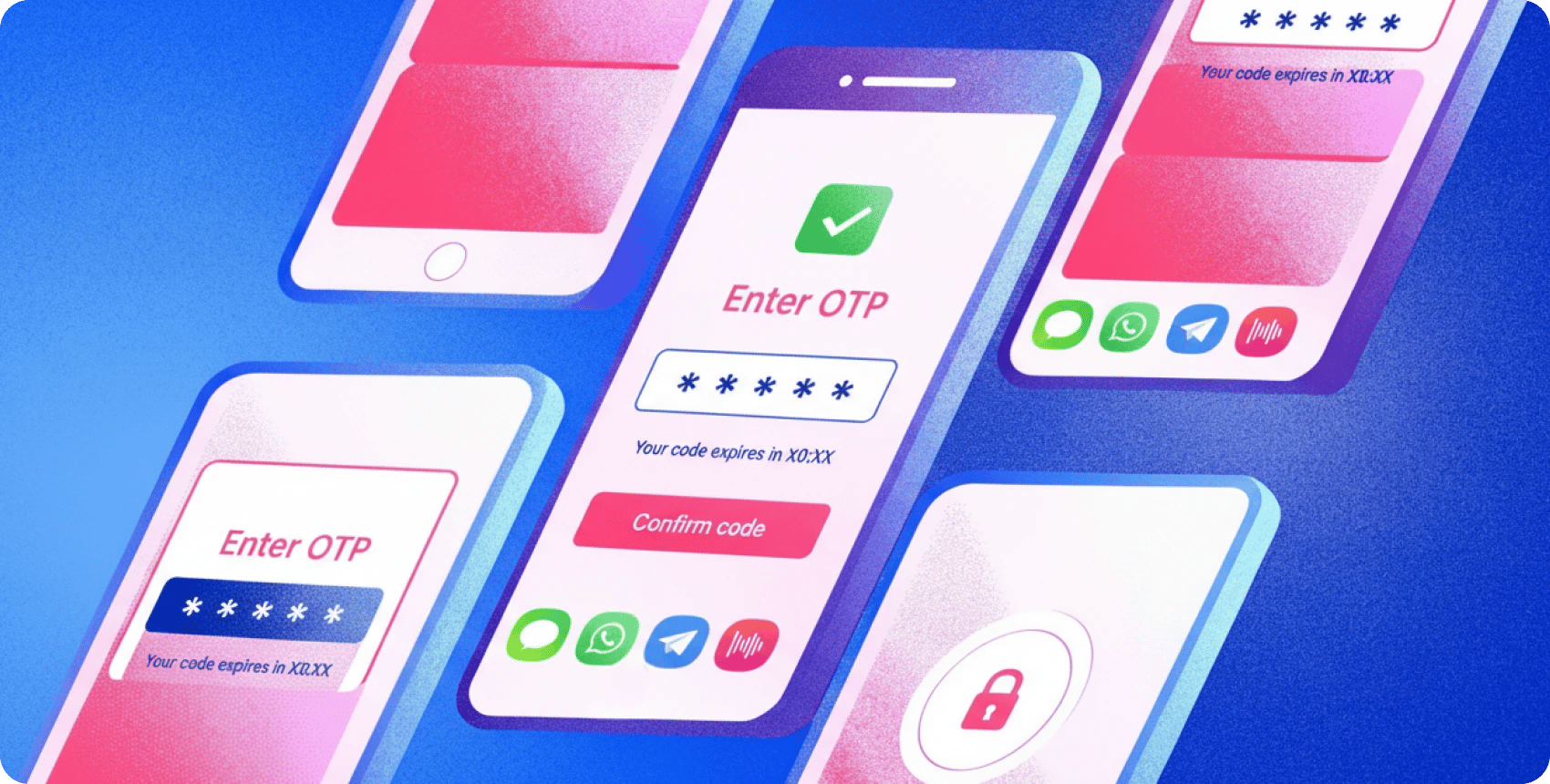
SMS covers a lot of ground. When SMS is your only OTP channel, the gaps in coverage and cost start to matter.
The channels you route OTPs through are a cost decision. WhatsApp and Telegram carry lower per-message rates than SMS. Prioritize them first, and most users get their code at a lower cost. SMS stays in the sequence as a fallback, not a default.
Broader coverage follows the same logic. Alternative channels reach users in markets where SMS infrastructure is limited, at rates that don’t carry the SMS premium.
MULTI-CHANNEL AUTHENTICATION
Standard OTPs deliver one-time passwords via SMS. Omnichannel OTP brings SMS, WhatsApp, Telegram, and voice into a configurable delivery sequence, in whatever order you decide. When one channel doesn’t deliver, the next in your sequence takes over.
The sequence is set per authentication type, so different situations can have different routing logic. A high-security flow might prioritize voice. A cost-sensitive use case might lead with WhatsApp or Telegram. SMS is used strategically where it makes sense, rather than being the mandatory baseline.
The configuration follows the use case, not a one-size-fits-all default.

SINGLE CHANNEL LIMITATIONS
SMS reliability varies more than most assume. Coverage gaps exist in markets that look well-served on paper. Roaming users frequently experience delays or failures. Carrier restrictions can block messages without warning. And SMS carries well-documented security vulnerabilities, including SIM swapping and SS7 exploits, that make it a weaker link in high-security flows. At scale, that’s a lot of users who don’t receive their code.
AUTHENTICATIONS USE CASES
Some touchpoints carry more weight than others. These are the ones where a failed verification has the highest cost:
A user locked out at login doesn’t always try again. Particularly for mobile-first products or apps with a competitive alternative a tap away.
First impressions count. The first authentication a new user encounters sets the tone for everything that follows.
Password reset is already a recovery moment. If the verification code doesn’t arrive, users have no path forward and no obvious next step. Most won’t look for one.
When money or sensitive data is on the line, delivery is vital. In financial services, e-commerce, or any flow where a transaction requires verification, a missed OTP could mean a failed transaction.
Agents logging in remotely or across regions need verification that works regardless of their location. Delays at login have a way of becoming delays in service.

OTP DUE DILIGENCE
Omnichannel OTP is only as good as the provider behind it. . When evaluating an omnichannel OTP partner to secure and streamline your user flows, certain core capabilities are essential:
THE BIGGER PICTURE
SMS got OTP off the ground. Omnichannel takes it further, where cost, coverage, and security shape every routing decision. The case for omnichannel is really a case for building verification that works.